Friday, 5 June 2020

ALERT! RAPIST!!


ANN ZULU writes 


The Rape culture in our Zambian society is becoming too extreme and we can no longer afford to ignore it or sweep it under the carpet - that is what got us here anyway.


Rapist


We need massive sensitization of our society, both online, offline, in schools, worship places, market places, work places, in cities, towns and rural communities.


The Government, the media, non governmental organizations, religious and academic institutions has a lot of role to play in reforming our society, to make it sane and safe for all, and for our future children.


There is absolutely no doubt that many parents of past generations failed their sons woefully by not teaching them the right values, especially where it concerns females and their bodies, consent, domestic chores, empathy, discipline, self control, anger management, their roles as husbands and fathers, equality of all humans- irrespective of gender...

The list is endless.


Please parents of this generation do not make the same mistakes. You must task yourselves to do better.  That is to raise boys right, not to neglect their mental and emotional well-being,

to teach them the right values - not the usual "you are a man and superior, and money is a man's pride" teachings that has caused so much irreparable damages.


The change we want begins with each and every one of us. It begins with the values we each both girls and boys. It begins with holding each other accountable. It should not be business as usual people. All hands has to be on deck if we want to get this right. Let's start taking actions now, please.


This foolish boy in the picture had the audacity to post in his University group chat about indulging in rape. The fact that his campus knew and no one batted an eye is heartbreaking. His name is JEFFREY, a student from the Copperbelt University (CBU).


Photo by:  Mwangala Monde.

Thursday, 4 June 2020

I am here for the women


ANN ZULU writes

I am here in this life to see women create the body they want and look hella gorgeous for what they paid for.


I am here for women in the village, rocking their Chitenges, flaunting black skin with sheen from coconut oil.
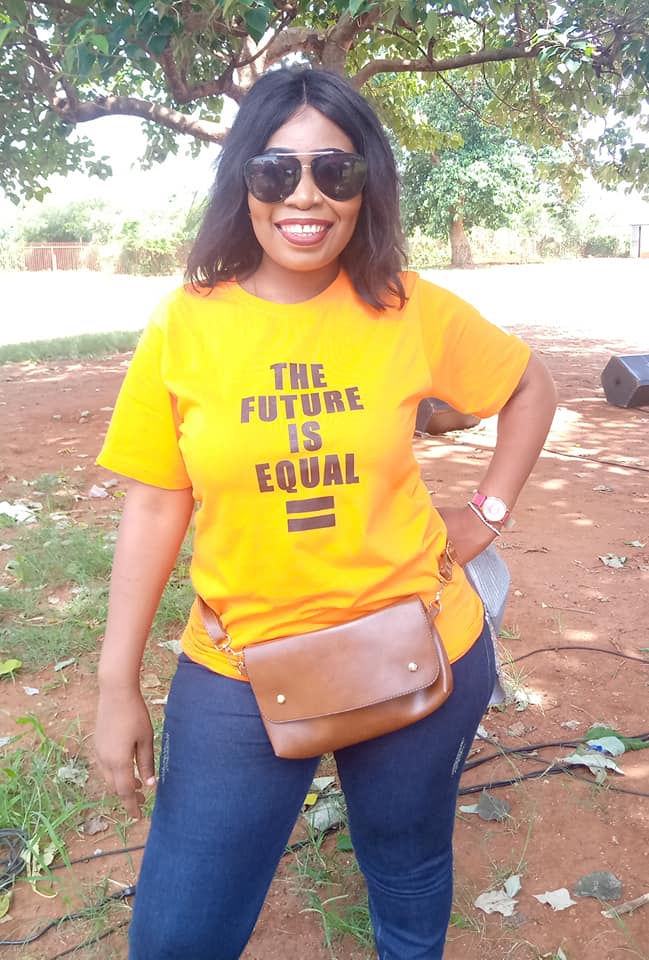
Ann Zulu


I am here for the unapologetic bad girls, living their best lives.

I am here for women who splurge like they are dying tomorrow.

I am here for women who save like they would live forever.


I am here for the women making money offline, keeping it real, giving other women opportunities.


I am here for women who have a voice to speak online and bless us with wisdom.

I am here for slay queens. The ones who want to be pampered.

I am here for women who exist and thrive on/for their physical beauty.

I am here for the intellectual queens. The STEM divas. The academic goddesses.

I am here for women with voices that can never be quenched. Never.

I am here for mothers who choose their children.

I am here for women who love the right niggaz.

I am here for women who walk out of institutions that relegate them.

I am here for fearless women.

I am here for women who are figuring it out.

I am here for the authenticity.

As long as it is authentic, I am here for it.

We feel it. We smell it. We know it

I am here for confident women, bold women, beautiful women, strong women, happy women, loud women, brilliant women, rebellious women, kind women...

Everything you represent in your authenticity is valid!

I am here for all of it.

MY NAME IS ANN ZULU

Women urged to participate in mining


ANN ZULU writes


WOMEN´s  participation in the mining sector remains low and there is a need for more to be done in encouraging them to take up opportunities in the sector, Mwape Musonda, a small scale miner has said.


Woman miner


Ms Musonda  said although the sector held promises for women, many were not bold enough when opportunities come their way and usually fail to take advantage of job offerings in the sector.

“All I am saying is that when you get an opportunity as a woman to take up any role, step-up, take the position, say you can do it and while you are there, figure out how you are going to do it. Just the willingness to do something can actually propel you to achieve it,” Ms Musonda said.

She also said more young women should be encouraged to take up the sciences and also visit the mines, to interact with women miners within the industry.

She said there aren’t too many impediments in the industry, but rather an educational level problem is what she believed hindered women’s participation.

“We are not getting enough women who are qualified technically to come into the industry,” she said.

She stressed the need to encourage women, to take up the study of mines and to visit the mines to learm more about the sector.

“Once we make this attractive and we encourage our children from childhood to start pursuing these courses we will get a lot more in the industry,” she said.


The Sad reality of Zambian women


...................Under-representation, GBV and Maternal Deaths


ANN ZULU writes

FROM the time that Zambia got its independence in 1964 to date, women have continued to face serious challenges such as under-representation in decision making, Gender Based Violence (GBV) and maternal deaths.


Under-representation in Decision Making


There has been a misconception that politics is about issues which concern men more than women. It is believed that men are associated with ‘hard’ politics and women with soft politics of the home.

But should women only be in the kitchen? Some men are also better caterers and better home keepers than women. A good example is the fast food industry, which has become a male-dominated area than that of females. Aren’t the operations of this industry centred on the kitchen?

Currently, there are 30 women out of 166 members of Parliament in Zambia. Figures in the 2012 national census show there are more women than men, in a total population of 17.86 million.

Views from people and various stakeholders engaged in promoting women inclusion in decision-making show that women can play a better role in ending corruption and addressing some major problems in society when voted into power not only as ministers or Members of Parliament but at the highest level as president.

So far, Zambian women like Deputy Speaker of the National Assembly Catharine Namugala, Chief Justice Irene Mambilima and Vice President Inonge Wina are occupying high positions in decision-making in the country and other women could take a cue from them.
Zambia`s Vice President Inonge Wina


GBV

GBV is another challenge that women are facing in Zambia and the country has in the past few years recorded massive cases of the vice.

According to the Zambia Police Victim Support  Unit 2019 Second Quarter GBV Statistics Report, there were 6, 139 GBV  cases reported countrywide.

GBV is a term used to describe any harmful act that is perpetrated against a persons will and that is based on socially ascribed differences between males and females.

While men and boys can be victims: survivors of some types of GBV (particularly sexual violence), GBV has a greater impact on women and girls.

Maternal deaths

The 2018 Zambia Demographic and Health Survey revealed that 674 maternal deaths were recorded in that year. The primary causes of these deaths were obstetric hemorrhage and indirect causes.

Obstetric hemorrhage was the most common cause of death among women ages 30-49 and women who had  experienced more than one pregnancy, while indirect causes attributed to most deaths among pregnant women ages 10-29 and first-time pregnant women.

Local platforms of engaging women

The Women`s Movement Organisations such as the Zambia National Women´s Lobby (ZNWL),  the Non-Governmental Coordinating Council (NGOCC), Young Christian Women Association (YWCA) and the Women In Law Southern Africa (WLSA) have created various platforms to help address these challenges that women are facing and also engage with them through platforms such as workshops, the media, road-shows and door to door sensitizations among others, although much still needs to be done.

The African Women In Dialogue (AFWID) journey

1000 women from 55 African countries attended this year's AWID forum, a forum which seeks to unite  African women from all walks of life under one roof to deliberate on issues of continental importance in in Johannesburg, South Africa.

The Forum which was held under the  theme “Women`s Power and Voices as Agents of Change”, saw women from various African countries share strategies and ideas how best they could address challenges faced by women on the continent.

It is certain that one of the biggest ways to address evil vices affecting women is through strengthened dialogue and AFWID has created that.

 If only African women stand up together and speak with one voice, challenges such as under-representation in decision making, GBV and maternal death will be a thing of the past.

Plight of children on streets


By ANN ZULU


ON the Great East Road in Lusaka, men and women yell as they make quick deals and sell various goods.

However, among these sellers are children between the age of 7-15, selling various items among them sachet water, fruits, soft drinks, and other consumables.

This is the scenario of hundreds of children who have been denied access to primary and secondary education in various townships of Lusaka.

Bertha Phiri, was seen crying by the road side on Kanyama’s Los Angeles Road when I moved close to her to ask why.

The 10-year-old girl said she misplaced K20 she made from the bananas she was hawking for her mother.

“I have just misplaced K20, the money made from the sales of fruits and my mum will beat me for carelessness when I get home. Please, will you help me, the innocent girl speaking in Nyanja asked me.

I assured Bertha that I will follow her home to plead with her mother, but she protested saying: “that will not stop me from being beaten, if not today, my beating will be doubled for the sin when you are gone.”

I then assured her that I will make the payment as we both trekked back home.

I asked Bertha why she was not in school.

“I have stopped going to school since I finished my primary education, my mum and dad fought, so we packed out of the house and left my dad. Since then, I hawk and my mother also hawks. The little we made is what we use to feed ourselves including with my two siblings, and pay house rent,” she explains.

Mary Mwamba, a resident of George Compound owns a food canteen in Lusaka’s heavy industrial area.

She has just instructed her daughter, Mwape, between the age of 13 and 15 to help fetch enough water before going to her place of work.

I however requested to know the job the little girl does.

“She wrote her Grade 7 exams last year and failed, since then I have put her at a place where she’s learning how to plait hair. She will make money from there and vend for herself. You know one must be serious and face reality.

“She failed her exams and she’s not very good with school, so it’s better she stops.  After all, she’s a girl its better she starts doing something and when she finds a man she wants to marry, she will continue her life and be independent,” she said.

At Chawama market, I observed that most of these kids work as maids in food canteens and recharge card stores.

KondwaniNdhlovu 17, narrates why he prefers selling recharge cards to any other business.

“Although, the gain in selling recharge cards is not really much, but it is not a dirty job and that’s why I chose the job,” he said as I asked him about his parents.

“They are both alive, my dad is a cobbler and my mother sells fritters. They told me they can’t send me to university and truly I understand that things are not really rosy for the family. I believe I will go to school, graduate and help my family,” he said

The case of Kondwani, is similar to that of Abigail, a 15-year-old girl of John Laing Compound who said upon getting married, she will decide if education is right for her or not.

“I hope I will get a husband to sponsor me. Although, I am doing my best now but I have to feed myself before thinking about schooling,” she said.

I also visited Intercity Bus Terminus and Kamwala Trading Centre around lunch time to observe how children mostly from Misisi, John Laing, Kanyama and other nearby compounds were running after vehicles chanting “Manzi (water), biscuit, bananas among other staff.

Most of the kids could not talk to me as they showed determination pursuing vehicles and could not want any conversation to deny them the gains of the day.

At Intercity Bus Terminus, they were mostly hawking satchet water, cold drinks and fruits.

In Linda compound, 14-year-old Edwin Mwamba helps his parents work at a farm in Makeni and is not in school.

He said his parents told him that school was not all that important and that he needed to work as a man.

“My parents told me that I was a big boy now, so I needed to learn how to do this work, so that I can take care of myself in future, he said.


Who is to blame?

Children Rights activist Mercy Hakalima shoulders blame on society.

“When education is being discussed, the rational thought that should come along is that it is the best and most effective way to develop a society. Besides, education serves as a tool that liberates the mind. So, a society that is genuinely interested in development should consider education an important factor.

“Hence, the only way that citizens’ education can be ensured is when it is managed by the public through its resources because it is a social responsibility not an individual responsibility.  Therefore the blame for child workers in Lusaka and the country at large should be placed at the doorsteps of Government.

“The knowledge gained from education when put into practical application does not only benefit the educated individual but the general society,” she said.


What the Zambian Law says on Child labour

The Employment of Young Persons and Children Act, Cap 274, describes a “child” as a person under the age of 15.

According to provisions of the Act, a child shall not be employed in any type of employment or work, which by its nature or the circumstances in which it is carried out constitutes a worst form of labour.

It states that any person who contravenes this, commits an offence and shall be liable on conviction to a fine not less than two hundred thousand penalty units but not exceeding one million penalty units, or to imprisonment for a term not less than five years but not exceeding twenty-five years, or to both.

State’s Reaction

Assistant Labour Commissioner in the Ministry of Labour and Social Security MukamasoleKasanda said the ministry was aware of the increased child hawking in Zambia, especially in the capital city.

She said the ministry has since scaled up its efforts in eradicating the vice and all forms of child labour in Zambia.

She said the ministry had been tirelessly working with line ministries and other stakeholders to ensure that matters of child labour were given attention and dealt with.

“Over the years child labour has been on the increase, especially in sectors such as agriculture, mining, and also nowadays there is also this hawking business where children are all over the streets selling things.

“The fight against Child Labour is a huge task, which requires collective efforts. So are working with other stakeholders such as the Ministry of Home Affairs, Ministry of Community Development, Ministry of Gender, the International Labour Organisation (ILO), the Public Prosecution Authority, local authorities, the community, tradition leaders and the clergy among other.

“We also have community district child labour committees in about 23 districts, these made up of different ministries and institutions that helps us with sensitisation. We noted that there is a lot of ignorance on child labour, so through these committees people are sensitised,” Ms Kasanda said.

She also expressed confidence that child labour would be a thing of the past by 2023, because of various programmes that were been implemented towards ending it.

“We see a situation in the near future, where we are going to reduce on the recent incidents of child labour and because of the efforts that are been made, we are  hoping that come hopefully by 2023, we might not see any child on the streets or involved in child labour,” she said.

And Community Development and Social Development Minister Olipah Phiri said Government through her ministry and other line ministries was implementing various social programmes aimed at keeping children in school.

Ms Phiri mentioned the Social Cash Transfer Scheme and the Girl’s Education and Women’s Empowerment and Livelihood (GEWEL) project as some of the programmes being implemented.

“GEWEL aims at enhancing social protection programmes that are specifically targeted to empower poor and vulnerable girls and women in the country. The project has three components; Keeping Girls in School initiative Supporting Women’s Livelihood and Institutional Strengthening and Systems building.

“As for the Social Cash Transfer Scheme, this is a social welfare system of identifying the most vulnerable and poor households in communities. Through this scheme, Government supports economically disadvantaged girls through bursaries to keep them in school,” Ms Phiri said.

However, in 2018, the Zambia National Education Coalition revealed that over 800, 000 children were out of school across the country.

And recent statistics indicate that 600, 000 children are employed in various sectors across the country, with 58 percent of them below the age of 14 years.

Child labour can be an obstacle to education, while education is also instrumental in the prevention of child labour.

It is through intensified sensitisation campaigns that this scourge can be halted.

Sunday, 24 May 2020

Women, most victims of social-economic effects of COVID 19- UN


By ANN ZULU


Lusaka, Zambia


COVID-19 is increasing poverty particularly among women and girls, Special Envoy of the United Nations (UN) Secretary-General for the Great Lakes region Huang Xia has observed.

Mr Xia said women were the most victims of the social-economic effects of the pandemic.

He said this when he chaired the 12th session meeting of the Advisory Board for Women, Peace and Security for the Great Lakes Region which was conducted via video conference with members from several countries.

The meeting set its agenda to include mobilization of the regional and international community to contribute to the fight against COVID-19 and to preserve the achievements recorded in relation to the Women, Peace and Security component; participation of women in the political and electoral process in the region; and engagement of member states to ensure prevention, protection and economic recovery and implementation of the Regional Action Plan.

It also reviewed the operationalization of the Regional Action Plan of resolution 2000 of the Great Lakes Region and examined the role of Gender Ministers in national, regional and international response to the ongoing health crisis as well as participation of women in forthcoming elections.

Participants of the 12th session meeting of the Advisory Board for Women, Peace and Security for the Great Lakes Region


Mr Xia urged members of the board to redouble their efforts to stimulate advocacy actions at local, national and regional levels towards not only prevention and protection, but also socio-economic transformation which would take into account the priorities of women and girls in all countries of the Great Lakes region during the COVID 19 pandemic.

And Members of the Advisory Board pledged to champion the interests of women and girls.

Gender in International Conference on the Great Lakes Region (ICGLR) Director and member of the advisory board Eliane Mokodopo noted that most women in the great lakes region could not provide family basic needs such as food and health services during this period.


“Women are the most active in business, especially informal sector. When borders are closed, and movements restricted, they cannot generate income," Ms Mokodopo said.

The board also made recommendations to Governments in the region to sensitize men and women to share responsibilities and tasks at home to reduce the heavy domestic work normally done by women.

They also suggested putting in place strategies to secure fund for women in order to allow them restart their financial activities when countries start the new normal.

The Advisory Board for Women, Peace and Security for the Great Lakes Region which Zambia is part of, was initiated in 2013 under the support of the office of the UN special Envoy to provide recommendations on issues related to women, peace and security.

Wednesday, 20 May 2020

A Zambian Female Journalist's Perspective

ANN ZULU Writes Despite having more female Journalists than men in Zambia, majority of people who hold top positions in the media are men, while women are the assistants or nothing.
In the Zambian media, It really doesn't matter whether the females are better, being female makes them only good enough to assist the male and be juniors.
As a matter of fact, “senior” positions are exclusively reserved for the best man, while the best woman is always his assistant or nothing.
In many cases, the best journalists are women, but hey they are still made to aspire for the second best position or nothing, NO MATTER how good they are.
This brings me to women in politics...... There are fewer females at the top because the enthusiasm to succeed, compete and beat the male counterparts has been killed.
Only a few women are able to break free from this societal-inflicted mental incapacitation, and go higher. And these few are most of the females you see at the top.
There are even cases where people have refused to vote for a particular candidate just because she is female.
I know we have come a long way from where we started the cause to break the gender barriers, but there is still a lot to be done.
We are still very far away from where we should be. We can do more as individuals and as people, we can start in our little capacities.
*Let us stop giving boys the impression that being males automatically entitles them to be better than half the world’s population.
*Vote the people who you genuinely believe are best suited for a particular position, irrespective of gender.
*Encourage girls as much as you encourage boys to aspire for top and leadership positions.
*Do not give female children the impression that the best they can be is second to a man.
*Let every individual have a fair chance to compete, and let the best person (not best male) win.
*When it comes to choosing, appointing or electing a leader, we stand a better chance of choosing the best from a whole population than we do from choosing from half the population.
Leadership is a human quality which actually cuts across both genders!!!!!

Rose Malowa Challenges Gender Norms in Zambia’s Church Leadership

  By Margaret Mwanza For many years, leadership in the church was largely viewed as a space reserved for men. Women were expected to serve ...